We use cookies to make your experience better. To comply with the new e-Privacy directive, we need to ask for your consent to set the cookies. Learn more.


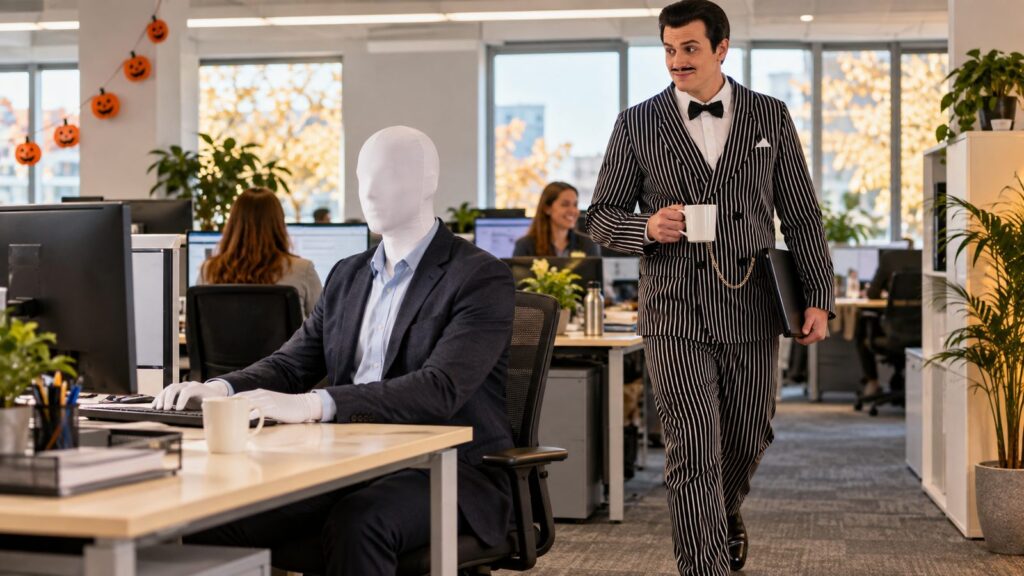
A work-appropriate Halloween costume clears a 4-point test: full coverage, no gore, nothing that risks offending a colleague, and comfortable enough to actually sit at your desk in. UK employers have no legal obligation to allow fancy dress at work at all, so a costume that passes all 4 points is what keeps the privilege on the table. The Morphsuit-based picks below pass; a few classic office-party regulars don't.
The four-point HR test
Coverage is the point everyone checks in a mirror. The other three are the ones worth thinking about, and the last one you only fail after you've sat down. Work through all four before you order, because a costume that fails on point three can't be rescued with a cardigan.
- Coverage. Full coverage from neck to ankle, the same amount of skin you'd show on any other Tuesday. UK employment guidance on Halloween dress codes is blunt about this one: legally, an employer does not have to let staff "come to work dressed as a scantily-clad cat, or Dracula, just because it's Halloween" (Croner UK). A solid-colour Morphsuit worn under a shirt or blazer, or a full-length costume with sleeves and a proper hem, clears it easily.
- No gore. No fake blood, boils, blisters, scars or contusions. UK employment guidance on Halloween dress codes flags excessive gore as a standard exclusion for a workplace costume, alongside clowns.
- No offence. This is the test that catches people out, because "work-appropriate" doesn't just mean "not sexy". The costumes that actually cause HR complaints are cultural-stereotype outfits, anything built around a real person, and jokes at another group's expense, not just bare skin. If a costume needs you to imitate an accent, a religion or an ethnicity to land, it fails here regardless of how much fabric it uses.
- Desk-ready. Full mobility and nothing that catches on a chair, a monitor or a colleague's coffee. The same UK guidance rules out anything that restricts movement, right down to "no giant hotdogs, Lego bricks, and no giant inflatable T-Rex", and separately reminds employers to hold the line on ordinary safety rules, footwear included, so a costume that needs sandals when your workplace doesn't usually allow them is out too. Save the big inflatable for after 5pm; more on that below.
Costumes that pass the test
Five costumes below, picked from our full Halloween costumes range, clear all four points: a solid-colour base layer up to a full character look you can sit at a desk in all day. Sizing carries more weight here than at a party: you're in the thing from nine in the morning, in front of the people you work with, with no going home to change. Read the size guide on each listing before you order; your usual shirt size is not a safe shortcut here. Every costume goes through over 30 measurement checks, a separate fact worth knowing on its own, not proof the guide will always land right for you. For the full range beyond the office-safe cut, see our Best Halloween Costumes UK 2026 guide; on a tighter budget, our best value Halloween costumes roundup covers cheaper picks against the same coverage-first brief.
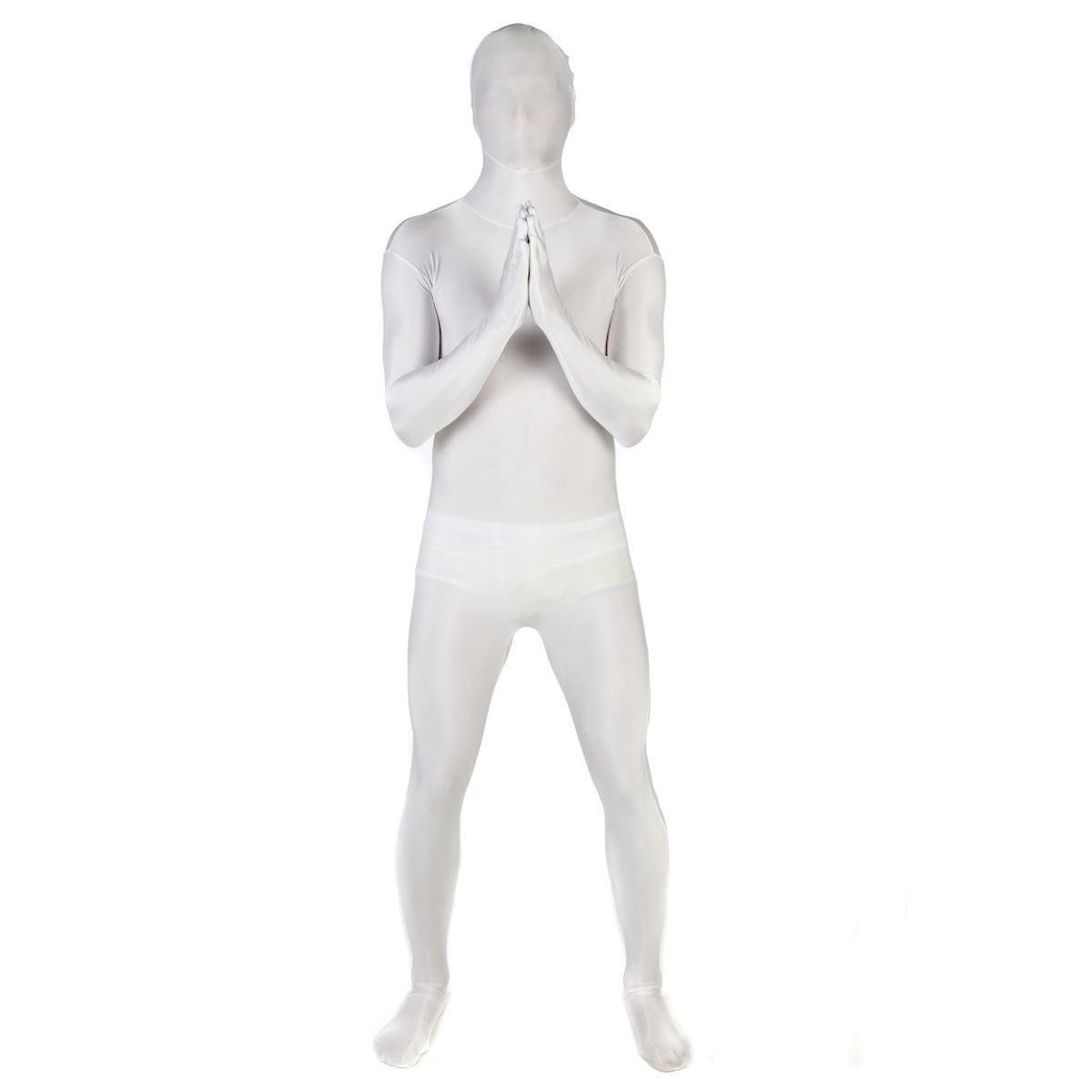
The quiet option: a solid-colour Morphsuit as a base layer
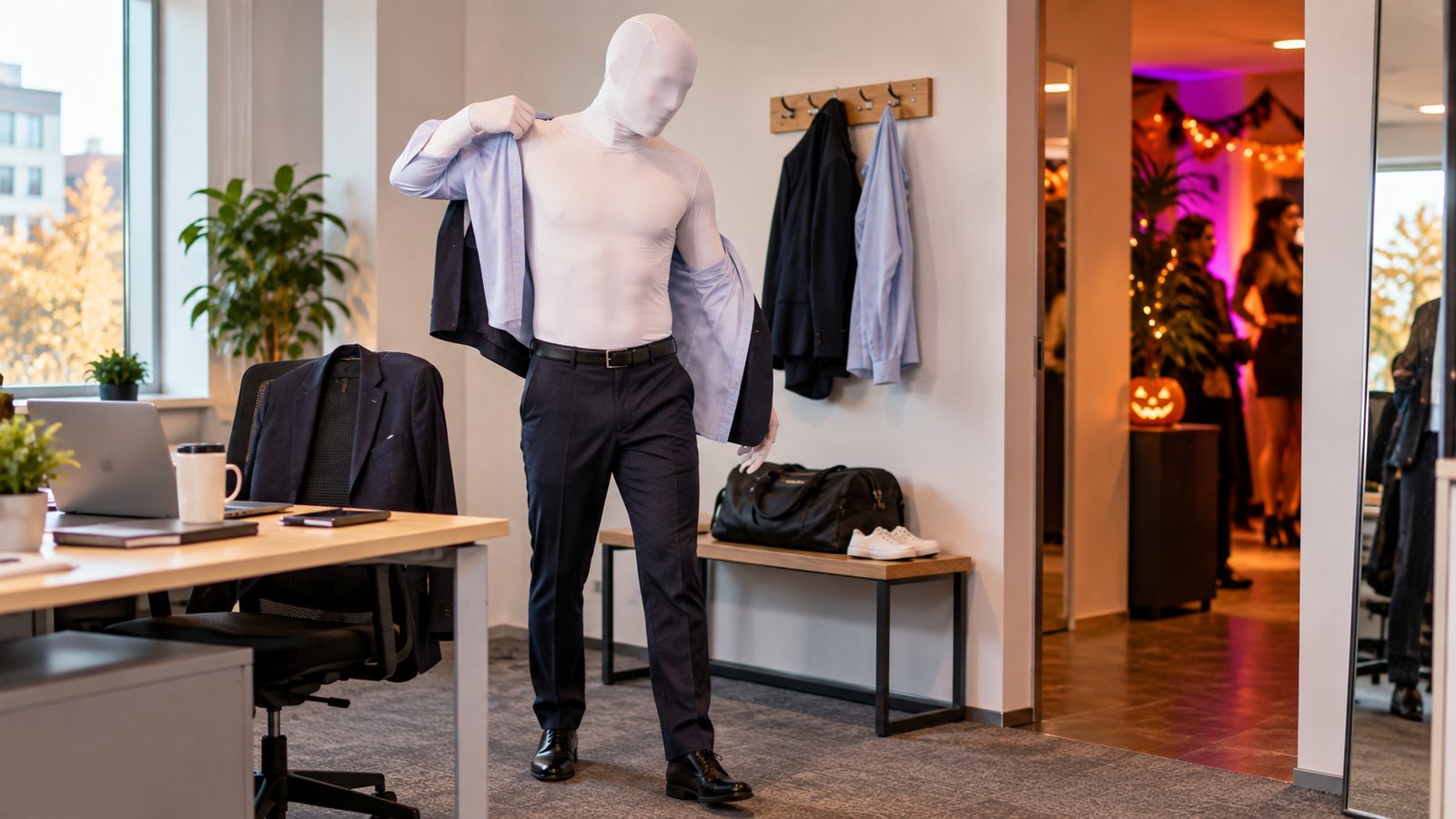
Our white Morphsuit is a second-skin bodysuit you can wear straight, or as a base under your usual shirt and trousers, so only your hands and head read as "costume". It's a 91% polyester, 9% elastane 4-way stretch build with double zips, the detail that decides whether a bodysuit is wearable for a full working day or only for a two-hour party, and the 125GSM+ breathable fabric is the other half of that: a second skin under a shirt for eight hours is a heat problem before it's anything else. Four adult sizes, M to XXL, and it's the one pick on this list you can escalate hard after work: layer a mask or a piggyback costume straight over the top for the party (see the desk-to-party section below).
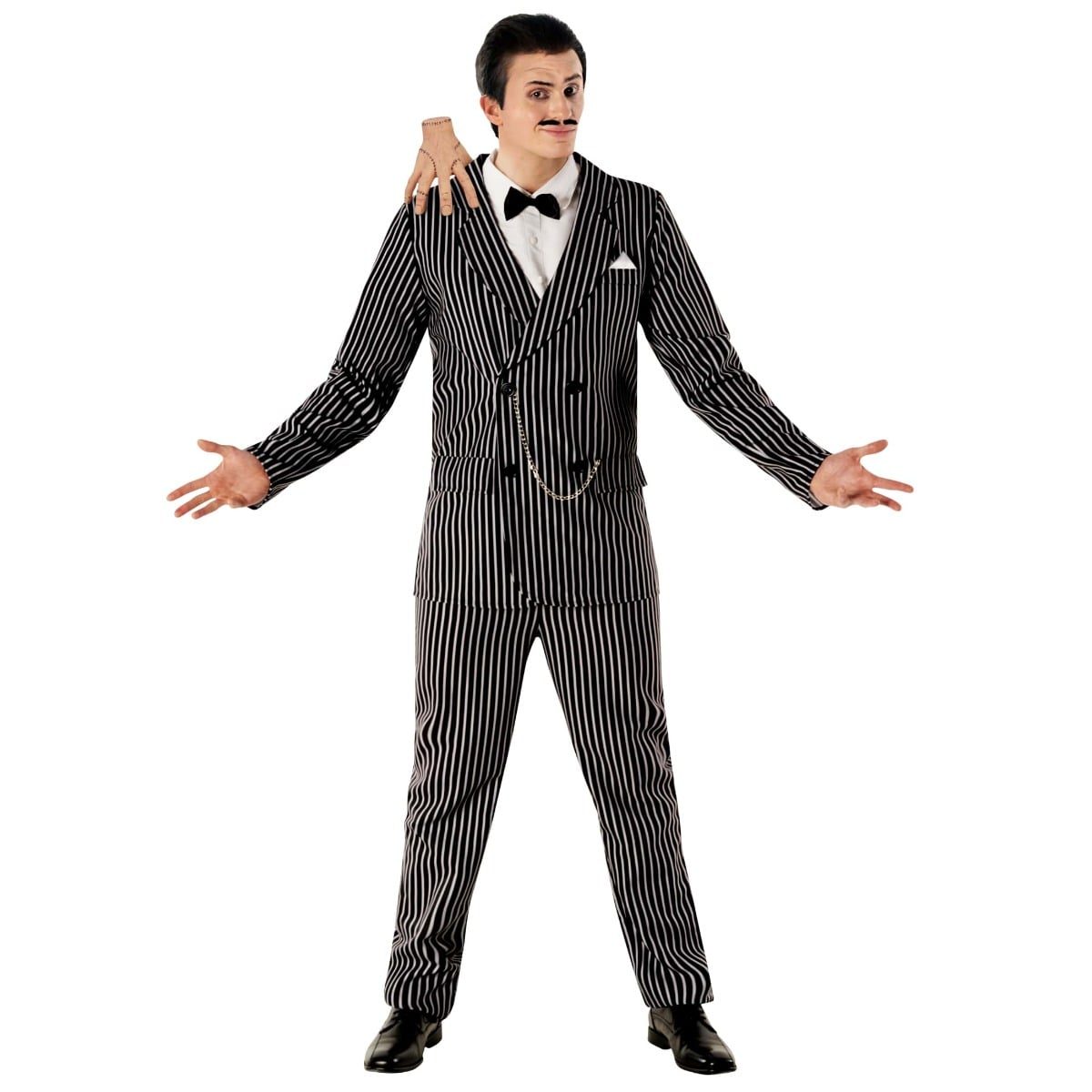
The "I'm already dressed for a meeting" option: a pinstripe suit costume
A sharp pinstripe blazer, matching trousers and a white shirt insert with an attached bowtie: this costume is, on paper, a suit. That's the whole appeal for the office. Our pinstripe suit costume comes in five sizes with an elasticated waist, so it sits and moves like real workwear rather than fancy dress. Coverage and desk-ready are settled before you've finished putting it on, and the offence test never engages at all: it's a suit.
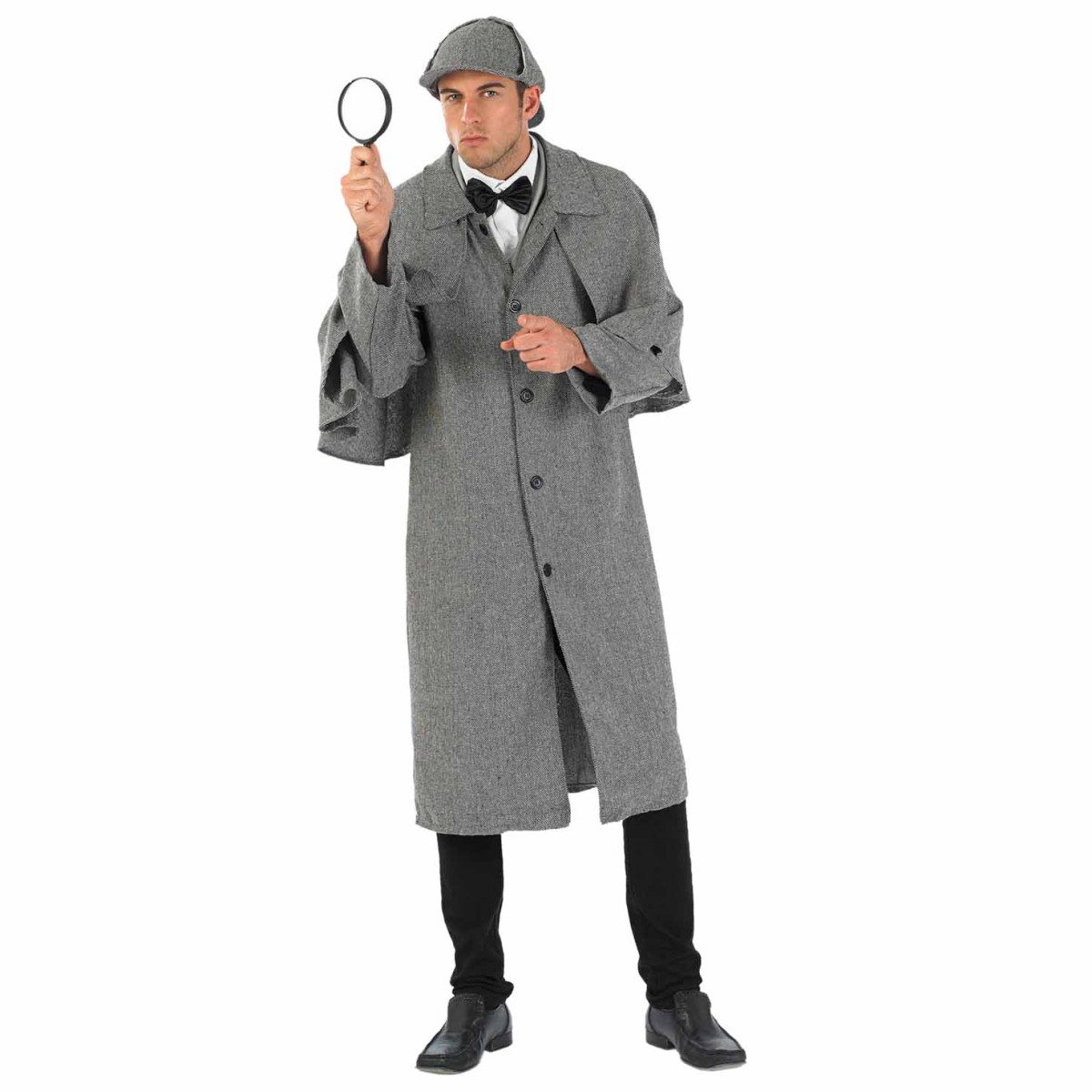
The alternate-career option: a Victorian detective
A caped coat, a waistcoat with a shirt-and-tie insert, a double-peaked hat and a bow tie: our Victorian detective costume reads as a character, not a warning sign, which is exactly the brief for an office party. It's built to be worn layered (the coat goes over the waistcoat insert, so it moves the way real outerwear does), available in M, L and XL, and there's nothing about it that needs explaining to a colleague who doesn't celebrate Halloween.
The classic that still passes: a skeleton jumpsuit
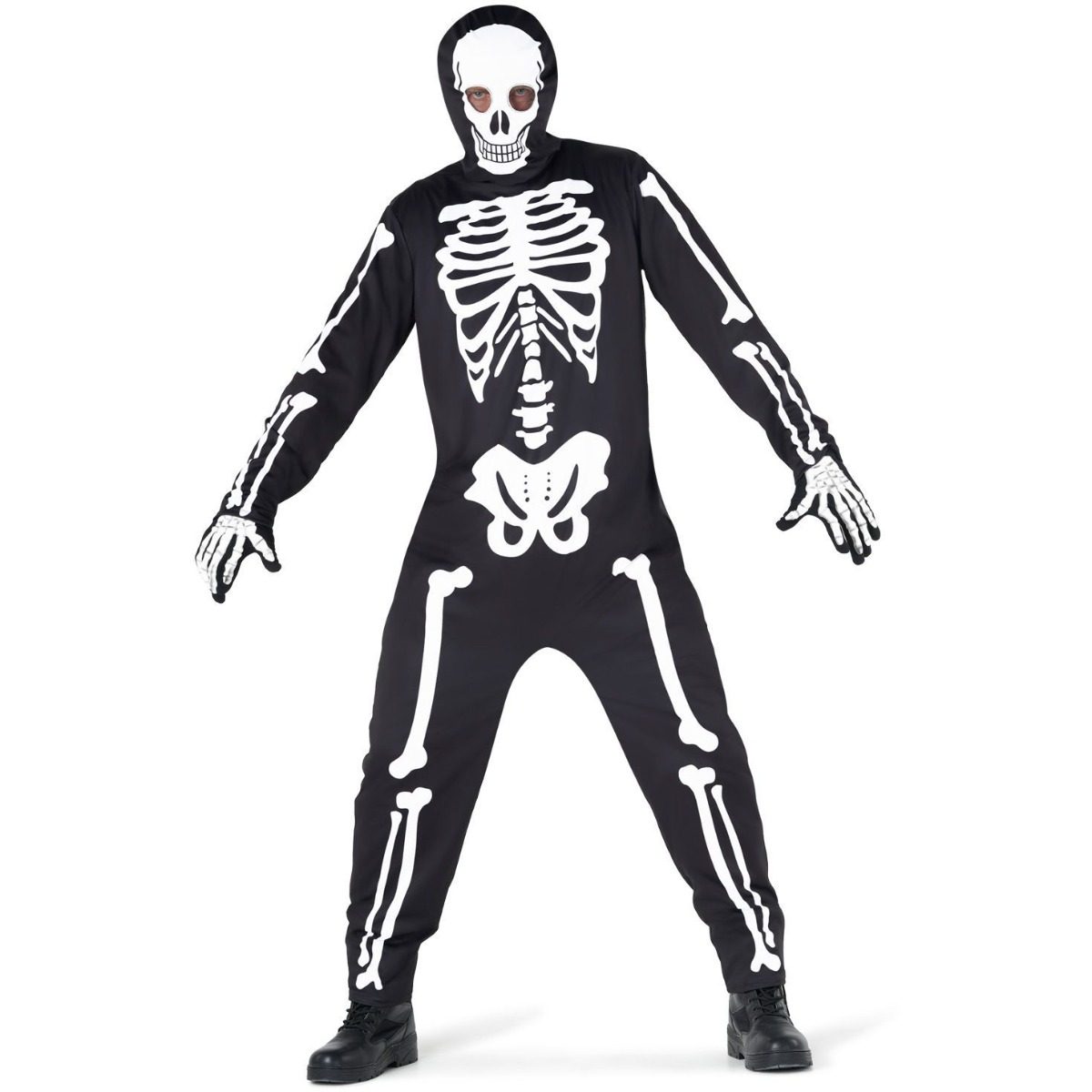
A bone print is a print, not an injury effect, so it reads as Halloween without tripping the gore rule. Our skeleton jumpsuit is full-length with a removable, mesh-eyed hood and attached gloves, so you can go full-skull for the walk in and drop the hood the moment you sit down. Reinforced stitching and a stretchy 100% polyester build, M to XXL: the stretch is what stops it pulling every time you get up from a chair, which a desk costume does all day long.
The playful-but-covered option: a fox costume
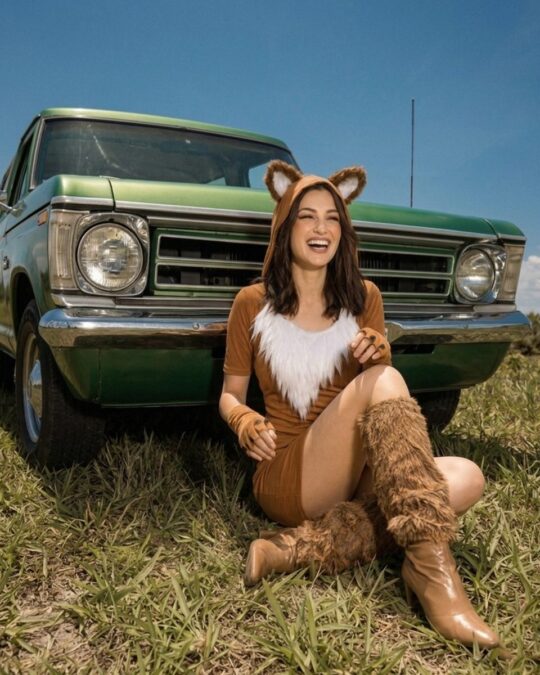
An animal costume is one of the safest categories for the "no offence" test, because there's no stereotype to get wrong. Our fox costume is a hooded dress with white fur trim and attached ears and tail, in four sizes across UK 8-22. Fingerless gloves are the only separate piece, so there's one thing to keep track of, not a box of accessories to lose under a meeting-room table by four o'clock. Our costumes are subjected to 500,000+ quality checks a year, the kind of scrutiny a product photo can't show you.
Alternate-career costumes for the office
"Alternate career" is one of the safest office costume prompts there is: dress as a job, not a joke, and you sidestep the offence test almost automatically. Detective, above, is one route in; our uniform costumes range is the wider one, and it's where we'd send a whole team that wants to coordinate without picking anything gory.
Ship's officer
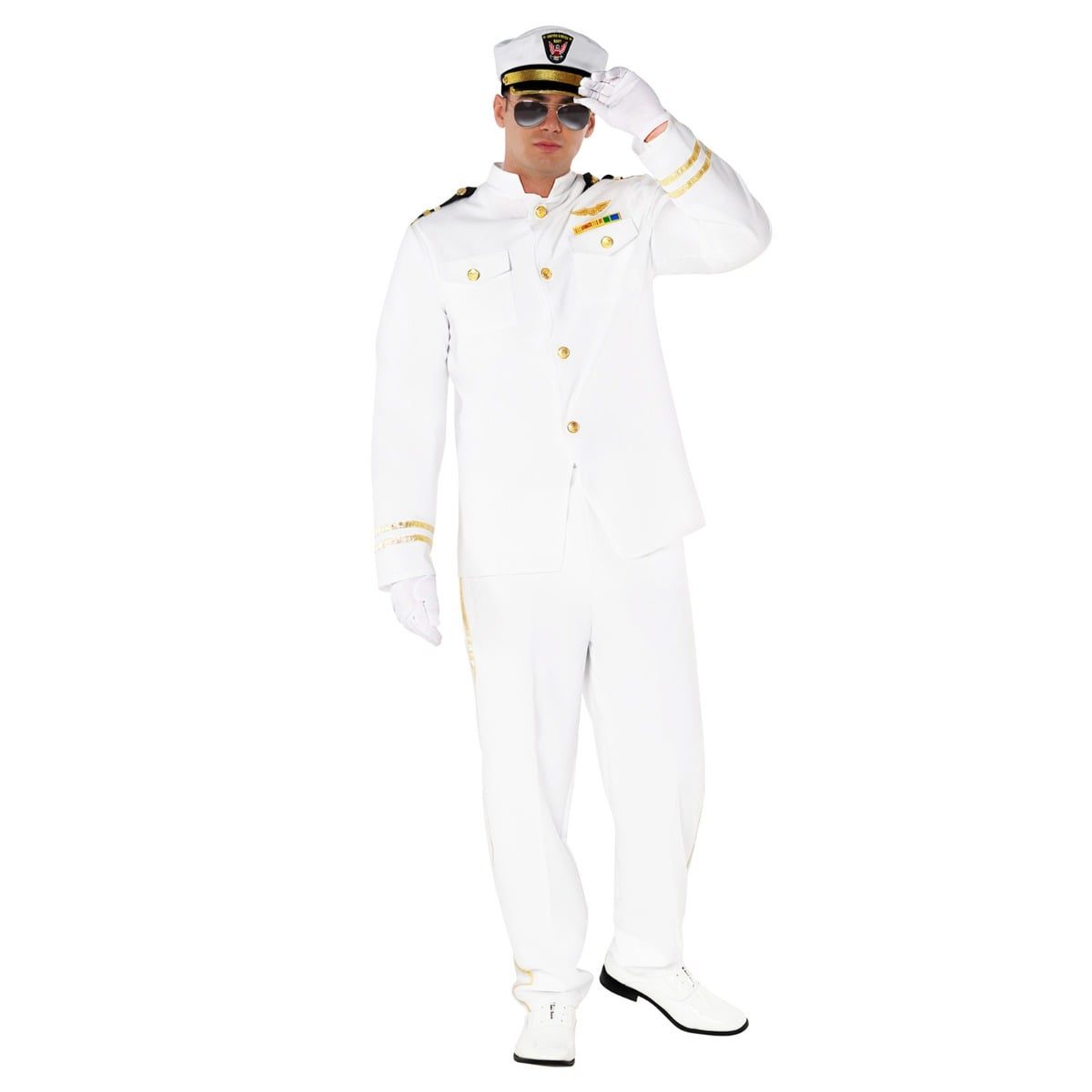
A naval-style jacket with epaulettes and gold trim, elasticated trousers with real pockets, an adjustable captain's hat and gloves. Our officer suit costume comes in M, L and XL, and the pockets are a genuinely useful desk-ready detail: somewhere to put your phone that isn't a costume prop.
1940s army uniform
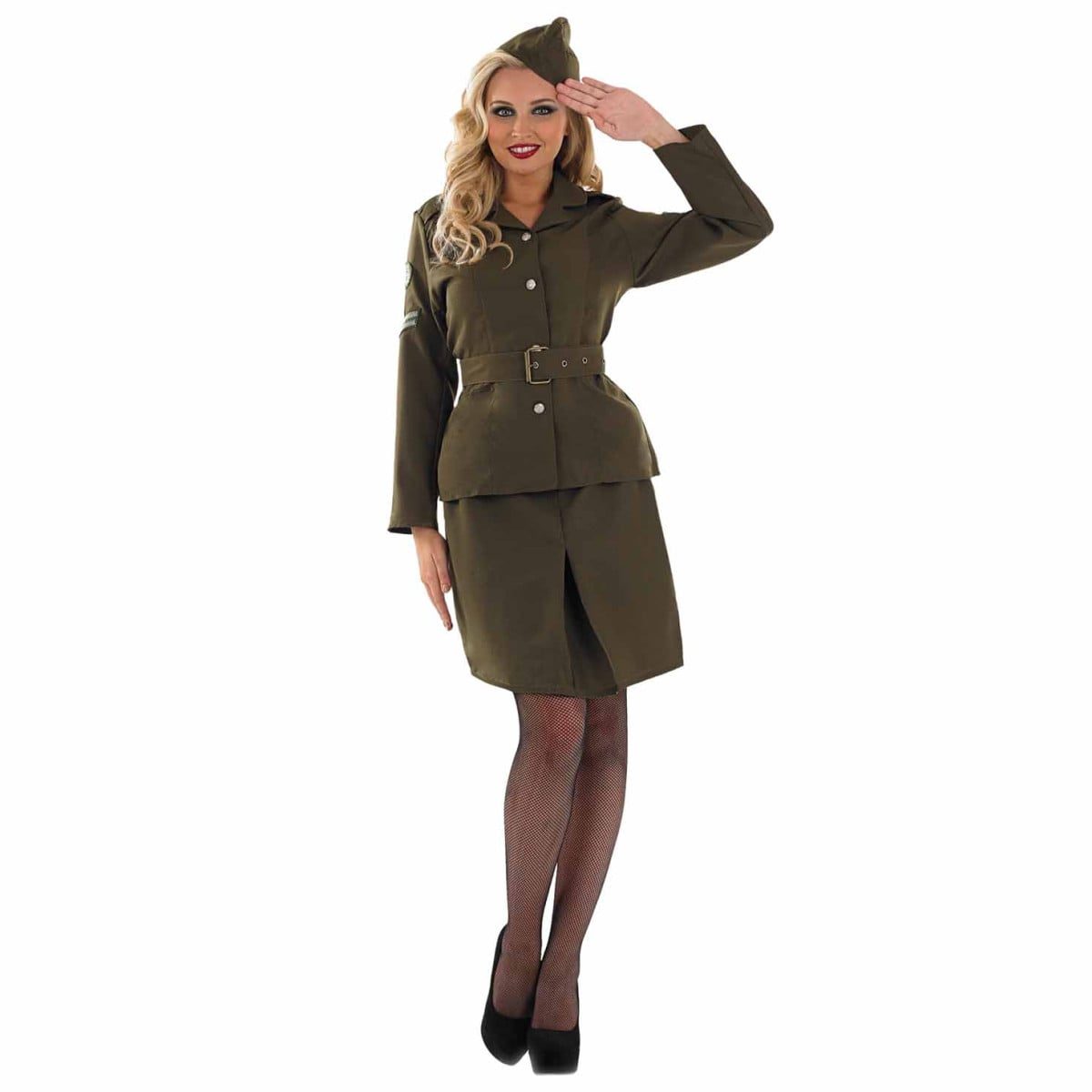
A coordinated 1940s look: a green jacket, skirt, matching belt and khaki hat. Our 1940s army uniform costume runs five sizes from UK 8-10 up to 24-26, each covering a two-dress-size span, so it's an easier fit call for a team ordering together than a single-size novelty outfit.
Decades, colours and team costumes
Two more office-safe prompts, beyond "pick a job": a decade, or a colour. A decade reads as a theme rather than an impersonation, as long as it stays about the clothes and not a named person, and it runs on the same coat-and-accessory formula as the detective and sailor costumes above. A colour is faster still for a last-minute team: our solid-colour Morphsuit range lets a department pick one shade each and turn up as a set, and because it's the same base-layer trick as the white one above, anyone who gets cold feet on the morning can put their shirt back on over the top and still be in the team photo.
The desk-to-party change-over
Yes, you can change a work-safe Halloween costume into a full party look after 5pm, and a base layer is what makes it quick. Wear a solid-colour Morphsuit under your work clothes all day, then once the desk test stops applying, strip back to the suit and add the pieces you held back that morning: a full mask instead of the open-faced hood, horns or ears, a piggyback or inflatable costume worn straight over the top. The same UK guidance that rules out "a giant inflatable T-Rex" at a desk has nothing against it at a party; that's a desk problem, not a Halloween problem.
Keep the escalation pieces in a bag under your desk rather than at home, so the change takes minutes in a toilet cubicle rather than a trip home. A mask, ears, a cape or a full-face hood all pack flat; a full inflatable doesn't, so check with whoever's running the party that there's somewhere to change and somewhere to stash a bag afterwards.
What HR actually objects to
The list UK guidance actually rules out is barely about skin at all: excessive gore, clowns, and anything that restricts movement, from oversized props to footwear that breaks the workplace's usual dress code (Croner UK). Cultural-stereotype and real-person costumes aren't named in that guidance, but they're the other recurring complaint in workplace Halloween coverage generally, which is why the offence test above pulls its own weight rather than riding on coverage or gore. Employers are under no legal obligation to permit Halloween fancy dress in the first place, so read that list as the floor rather than the ceiling. Two myths worth dropping before you order anything:
- "Work-appropriate just means not sexy." Coverage is one test out of four. A fully-covered costume built around a cultural stereotype, a real person, or a joke at another group's expense fails the offence test regardless of how much fabric it uses.
- "If there's no written policy, there's no risk." The opposite is closer to true: with no legal obligation to allow costumes at all, an employer can restrict Halloween dress-up under an existing dress code whether or not there's a written Halloween-specific policy.
None of which means skip it. Workplaces that do allow Halloween costumes tend to report it as a genuine morale lift, not just a distraction, provided the costumes themselves don't cause a problem. Passing the four-point test is how you get that upside without being the reason your office stops allowing costumes next year.
Frequently asked questions
What Halloween costumes are appropriate for work?
A costume that covers you fully, carries no gore, risks no offence and doesn't restrict your movement at a desk. A solid-colour Morphsuit worn under your usual clothes, a suit-style costume, a period character like a detective or a sailor, or a fully-covered animal costume all clear the bar. Save inflatables, giant props and anything with an open mask for after work.
What Halloween costumes are inappropriate for work?
Anything with fake blood, wounds or injury effects; anything built on a cultural or ethnic stereotype, a real person, or a joke that singles out a colleague; and anything that stops you moving normally, from a giant inflatable to footwear that breaks the workplace's usual dress code. UK employment guidance names the gore and movement categories explicitly; the offence category is the other complaint that recurs across workplace Halloween coverage generally.
Can my employer ban Halloween costumes?
Yes. UK employers have no legal obligation to allow fancy dress at work at all, and can restrict or refuse it under an existing dress code whether or not there's a written Halloween policy. If your workplace does allow it, treat the four-point test (coverage, no gore, no offence, desk-ready) as the unwritten policy.
Can you change a work-safe Halloween costume into a full party look after 5pm?
Yes. Wear a solid-colour Morphsuit as a base layer under your work clothes all day, then swap the open-faced hood for a full mask and add a piggyback or inflatable costume over the top once the desk test no longer applies. Keep the escalation pieces in a bag at your desk rather than at home, so the change takes minutes rather than a trip back to the house.
Is it OK to wear fancy dress to work for Halloween?
It depends on your workplace and your role: client-facing and medical-adjacent jobs tend to be more cautious about fancy dress at work than an office-only team would be, and some UK workers consider it unprofessional outright. Check with your manager before you buy anything, and lean on the four-point test either way.
